MQ-135 Air Quality Sensor
Complete Tutorial: Indoor Air Quality & Pollution Monitoring
1. Introduction
The MQ-135 is an air quality sensor designed for detecting harmful gases in the air. It's commonly used in indoor air quality monitors, pollution detection systems, and HVAC control applications.
📦 Gases Detected
- CO2 (Carbon Dioxide)
- NH3 (Ammonia)
- NOx (Nitrogen Oxides)
- Alcohol vapors
- Benzene
- Smoke
2. Technical Specifications
| Parameter | Specification |
|---|---|
| Operating Voltage | 5V DC |
| Heater Current | ~150mA |
| Load Resistance | 20kΩ (adjustable) |
| Preheat Time | 24+ hours for accurate calibration |
| Output Type | Analog (AO) + Digital (DO) |
| Detection Range | 10-1000 ppm (varies by gas) |
How It Works
Like other MQ sensors, the MQ-135 uses a tin dioxide sensing element:
- Heater keeps the sensing element at optimal temperature
- In clean air, resistance is high (low voltage output)
- Pollutants reduce resistance (higher voltage output)
- Different gases have different sensitivity curves
⚠️ Important: Burn-in Period
For accurate readings, the sensor needs a 24-48 hour burn-in period when first used. Run it continuously in clean air to stabilize the baseline.
3. Wiring Guide
| MQ-135 Pin | Description | Arduino | ESP32 |
|---|---|---|---|
| VCC | Power (5V) | 5V | VIN/5V |
| GND | Ground | GND | GND |
| AO | Analog Output | A0 | GPIO 34 |
| DO | Digital Output | Pin 2 | GPIO 13 |
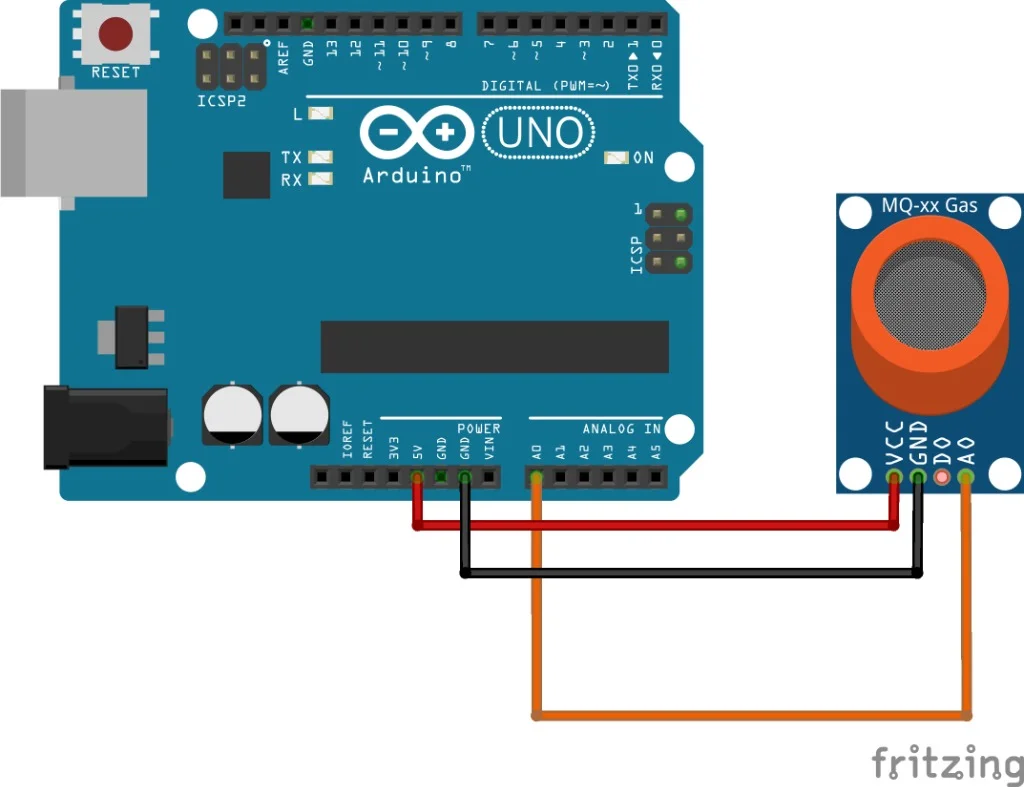
Figure 1: MQ-135 sensor wiring with Arduino
4. Project: Air Quality Monitor
Basic Air Quality Reading
const int sensorPin = A0;

void setup() {
    Serial.begin(115200);
    Serial.println("MQ-135 Air Quality Sensor");
    Serial.println("Warming up (2 minutes)...");
    delay(120000);  // 2 minute warm-up
    Serial.println("Ready!");
}

void loop() {
    int rawValue = analogRead(sensorPin);
    float voltage = rawValue * (5.0 / 1023.0);

    Serial.print("Raw: ");
    Serial.print(rawValue);
    Serial.print(" | Voltage: ");
    Serial.print(voltage, 2);
    Serial.print("V | Air Quality: ");

    if (rawValue < 150) {
        Serial.println("Excellent");
    } else if (rawValue < 300) {
        Serial.println("Good");
    } else if (rawValue < 500) {
        Serial.println("Moderate");
    } else if (rawValue < 700) {
        Serial.println("Poor");
    } else {
        Serial.println("Hazardous!");
    }

    delay(2000);
}
Air Quality Index (AQI) Approximation
const int sensorPin = A0;

// Baseline value in clean air (calibrate this!)
const int cleanAirValue = 120;

void setup() {
    Serial.begin(115200);
    Serial.println("MQ-135 AQI Monitor");
    Serial.println("Calibrating...");
    delay(60000);
}

void loop() {
    int rawValue = analogRead(sensorPin);

    // Calculate a relative pollution index
    float ratio = (float)rawValue / cleanAirValue;
    int aqi = (ratio - 1.0) * 100;
    if (aqi < 0) aqi = 0;
    if (aqi > 500) aqi = 500;

    Serial.print("Raw: ");
    Serial.print(rawValue);
    Serial.print(" | AQI: ");
    Serial.print(aqi);
    Serial.print(" | Category: ");

    if (aqi <= 50) {
        Serial.println("Good (Green)");
    } else if (aqi <= 100) {
        Serial.println("Moderate (Yellow)");
    } else if (aqi <= 150) {
        Serial.println("Unhealthy for Sensitive (Orange)");
    } else if (aqi <= 200) {
        Serial.println("Unhealthy (Red)");
    } else if (aqi <= 300) {
        Serial.println("Very Unhealthy (Purple)");
    } else {
        Serial.println("Hazardous (Maroon)");
    }

    delay(2000);
}
5. MQ-135 vs Other Air Quality Sensors
| Sensor | Best For | Interface |
|---|---|---|
| MQ-135 | General air quality, NH3, CO2 | Analog |
| CCS811 | eCO2 and TVOC (calibrated) | I2C |
| BME680 | Gas + Temp + Humidity + Pressure | I2C |
| PMS5003 | Particulate matter (PM2.5) | UART |
For precise CO2 measurements, consider dedicated CO2 sensors like MH-Z19 or SCD30.
6. Applications
- Indoor air quality: Office and home monitoring
- HVAC control: Ventilation based on air quality
- Smart home: Trigger air purifier or alert
- Industrial: Workshop fume detection
- Education: Environmental science projects
7. Troubleshooting
High readings in fresh air
- Allow longer burn-in time (24-48 hours)
- Ensure good ventilation during calibration
Readings don't change
- Check 5V power supply
- Verify sensor is warm (heater working)
Very low readings
- Check analog pin connection
- Verify ADC is working with a known voltage
8. Summary
- Detects CO2, ammonia, NOx, alcohol, benzene, smoke
- Requires 5V and long burn-in period (24+ hours)
- Analog output proportional to pollution level
- Calibrate baseline in known clean air
- Not a precision sensor—use for relative measurements