Understanding Stress and Strain
In mechanical engineering, Stress and Strain are the fundamental concepts used to describe how materials respond to external loads. Whether you are designing a bridge or a 3D-printed bracket, understanding these values is critical to preventing failure.
Strain (ε) = σ / E
Axial Stress (σ)
Stress represents the internal force distribution within a material. It is measured in Pascals (Pa) or Megapascals (MPa). In axial loading (pulling or pushing), the stress is simply the force divided by the cross-sectional area of the part.
Engineering Strain (ε)
Strain is the measure of deformation. It is a dimensionless ratio comparing the change in length to the original length. For small deformations, strain is directly proportional to stress, a relationship known as Hooke's Law.
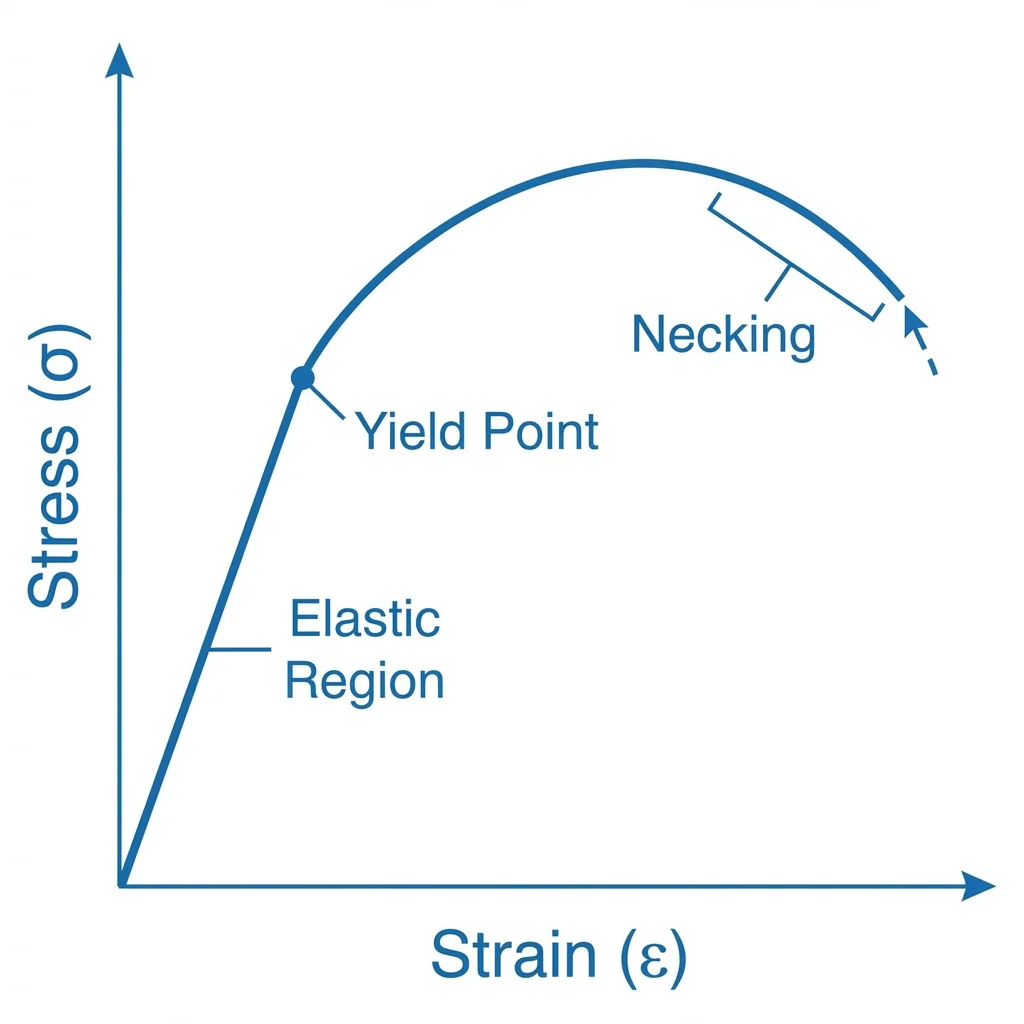
Figure 1: Typical Stress-Strain Curve showing the Elastic and Plastic regions.
Key Material Properties
- Elastic Region: The range where the material returns to its original shape after the load is removed.
- Yield Point: The stress level where the material begins to deform permanently (plastic deformation).
- Ultimate Tensile Strength (UTS): The maximum stress a material can withstand before failing.
- Young's Modulus (E): A measure of material stiffness. Higher values (like Steel) indicate stiffer materials that resist deformation.
Comparison Table: Common Materials
| Material | Young's Modulus (GPa) | Yield Strength (MPa) |
|---|---|---|
| Steel (A36) | 200 | 250 |
| Aluminum (6061-T6) | 70 | 240 |
| Copper | 117 | 70 |
| PLA (3D Printed) | 2.5 - 3.5 | 40 - 60 |