How Belt-Drive Systems Work
Belt and pulley systems are widely used to transmit power between shafts. Unlike gears, they can span large distances and provide a degree of flexibility and shock absorption.
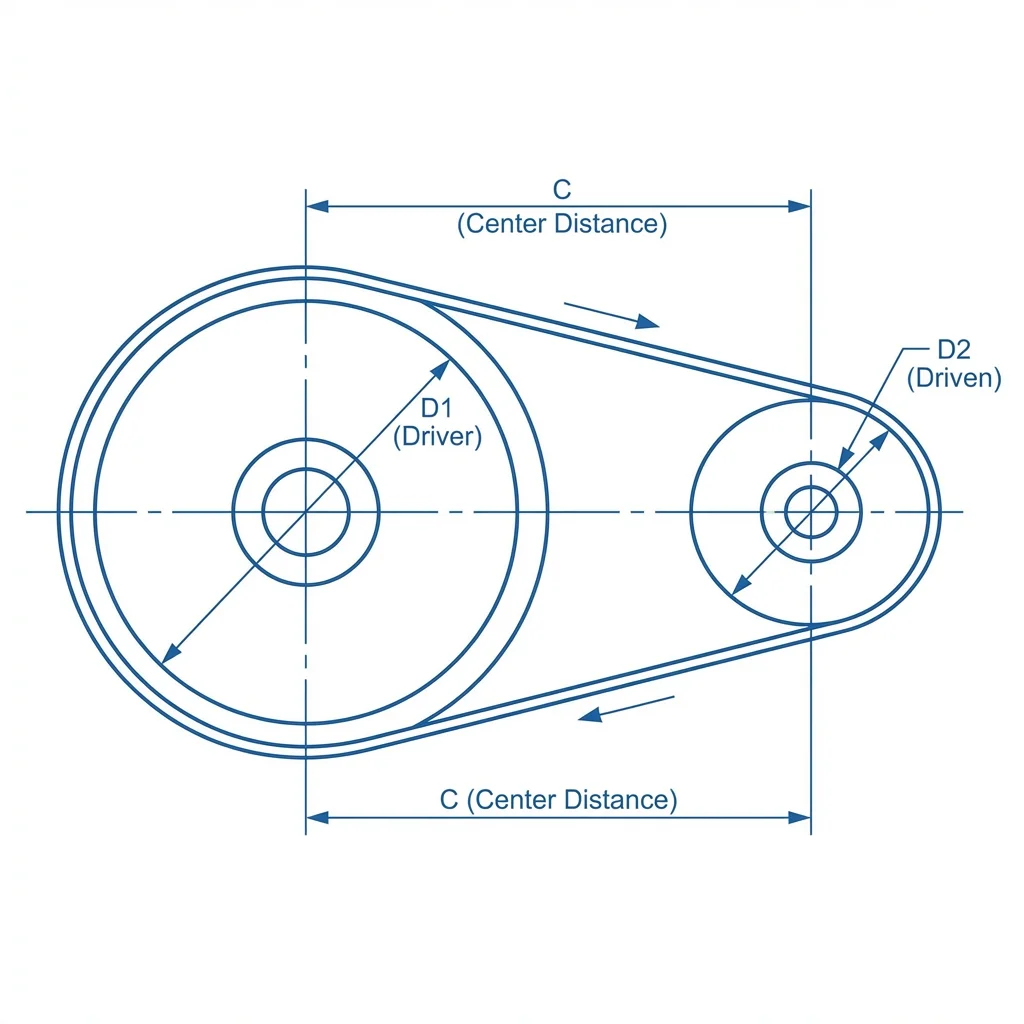
Figure 1: Standard two-pulley system with driver D1, driven D2, and center distance C.
Calculating the Pulley Ratio
The relationship between the diameters determines the speed and torque trade-off. A larger driven pulley will rotate slower but provide more torque.
Ratio = D2 / D1
Driven RPM and Torque
- Driven RPM: Driver RPM / Ratio
- Driven Torque: Driver Torque × Ratio (ignoring ~5-10% friction losses)
Belt Length Formula
Calculating the exact length of the belt is essential for purchasing or designing 3D-printed timing belts.
Length ≈ 2C + 1.57(D1 + D2) + (D2 - D1)² / 4C
Design Considerations
- Belt Tension: Too loose and the belt will slip; too tight and you'll damage motor bearings.
- Wrap Angle: The belt should wrap around at least 120° of the smaller pulley to prevent slipping.
- Alignment: Pulleys must be perfectly parallel, or the belt will "walk" off the edge.